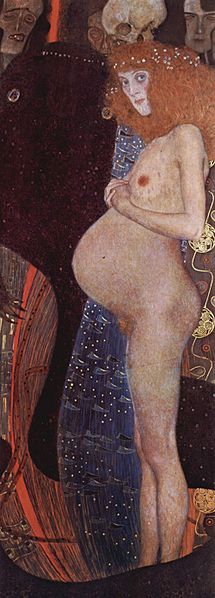
Sunday, February 5, 2012

Ozymandias

I met a traveler from an antique land...

Believe it or not, every now and then I have to dispose of books. Shocking, I know. But for an avid acquirer of books, there's only so much space one can give to one's hobby. New books come in and in and in, and eventually the children want to know why their bed pillows have been replaced with paperbacks stuffed into shams. That's when I know it's time for a cull.

We have donated books to the library and charity auctions, and passed them along to friends. Even though parting with books stings, I know they're going to good homes. This is the only way I can bear to do it.

But there are some books that always give me pause as I sort through the stacks, deciding what stays and what goes. These books I pull from the shelf, open the front cover, and smile--sometimes wistfully, sometimes joyously. These books were gifts.

When I encounter the books people have given me over the years, they take me back to a particular point in time as effectively as a photograph. They represent where I was in my life, or where the giver was in his / her life. The inscriptions written inside are as meaningful to me as the text of the book itself.

And on the pedestal these words appear:


This one was given to commemorate a graduation.
Graduation Day
1997

One gift represented a time of youth and discovery, of the blossoming fire that comes with embracing life and forging new relationships.

I just want you to know that your Friendship has become shockingly important
in such a short period of time. I want you to know I only give this book to people who are
special, so I guess that means something. Yeah, I'm rambling now.

I've received some that are pure nostalgia.

May you live all your life with the words and wisdom of Rhyme and Reason...

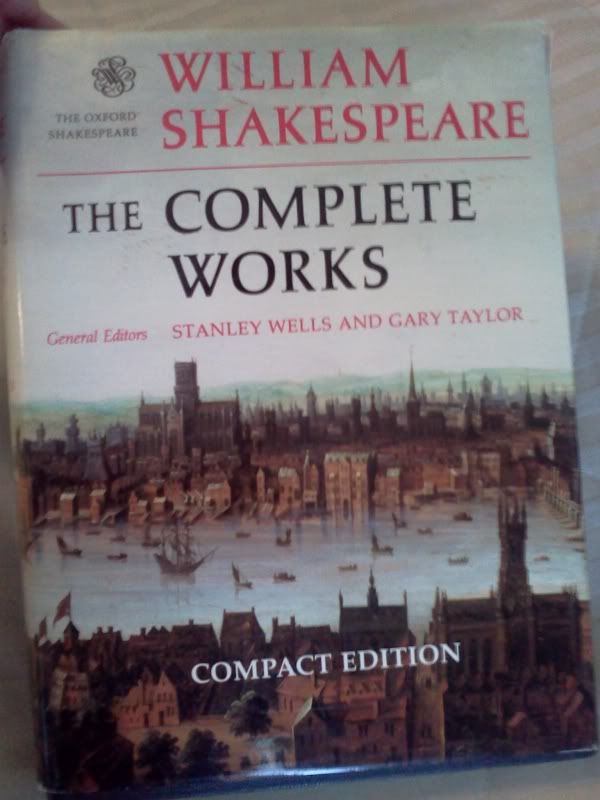
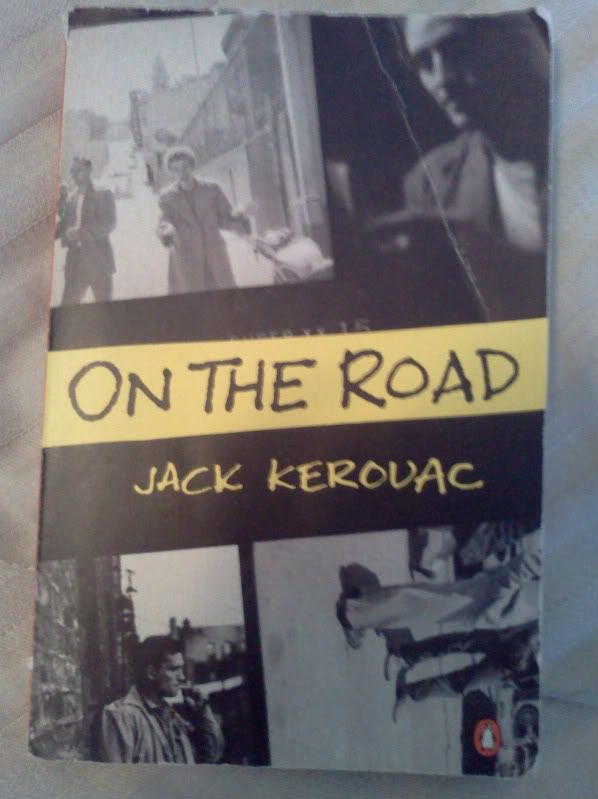
And one that's traveled the world, finding its way into the hands of several burgeoning writers, with multiple inscriptions to go with it.
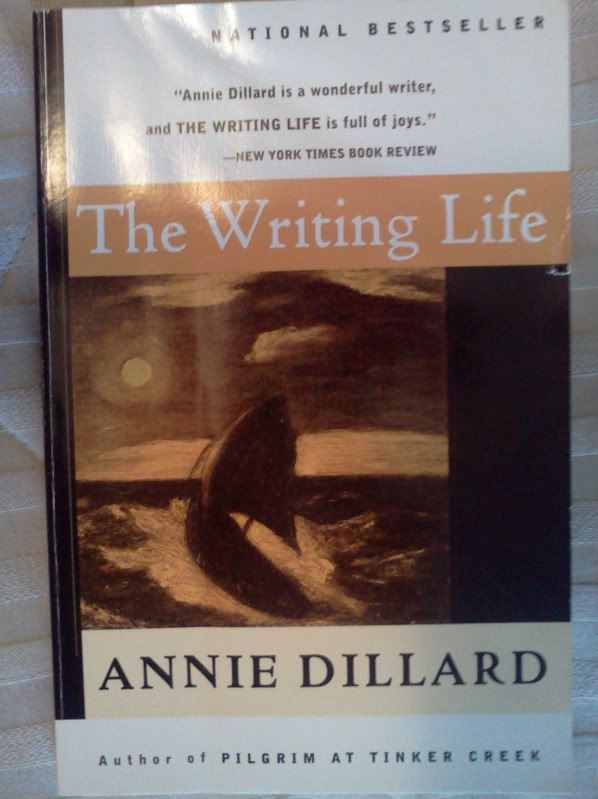
This is from a waitress in a cafe in Flagstaff.
"Writing down the Bones"
I love you! --and I know you'll do it all!!
May this help guide you through your quarter-life crisis.

Beautiful books that are a joy just to hold and admire.
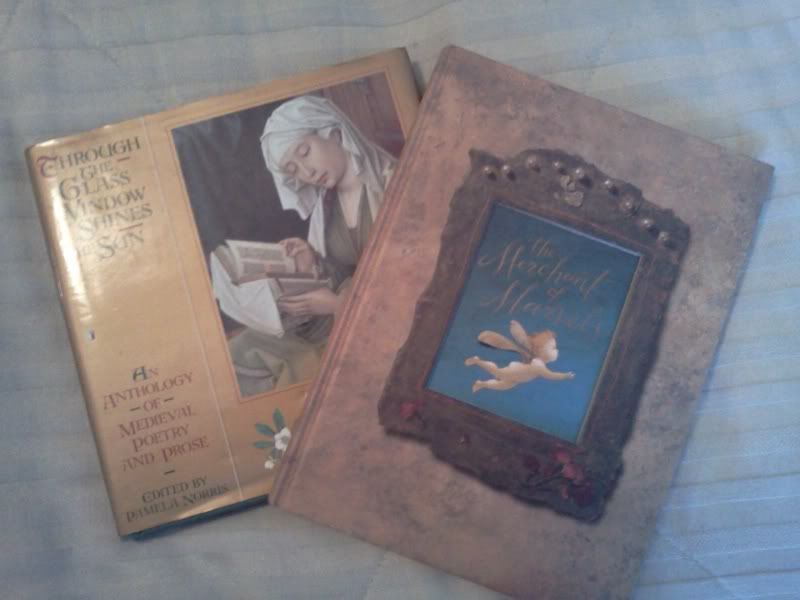
A special book for a special person! Chase all those dreams.

And others to mark the changing seasons of my life.
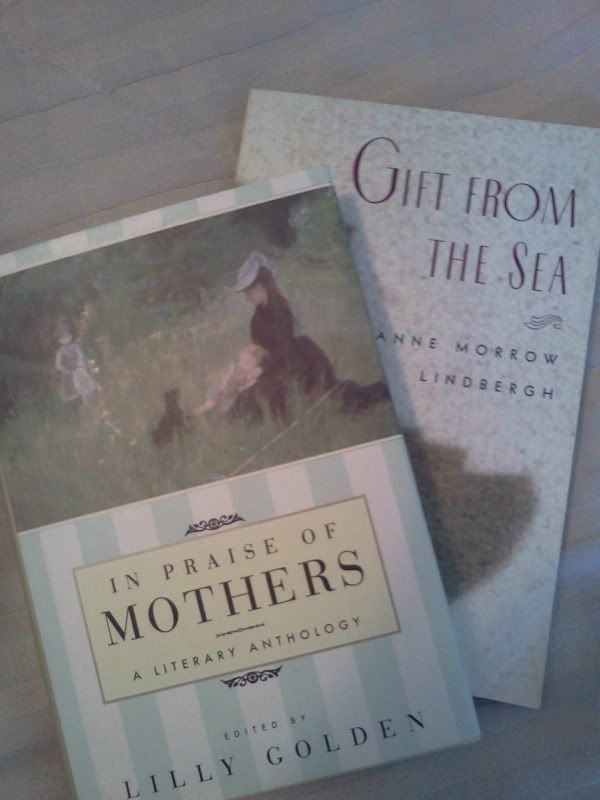
The greatest thing I ever did was become a mother. May you always honor your stewardship.

And yes, there are books from loves past.
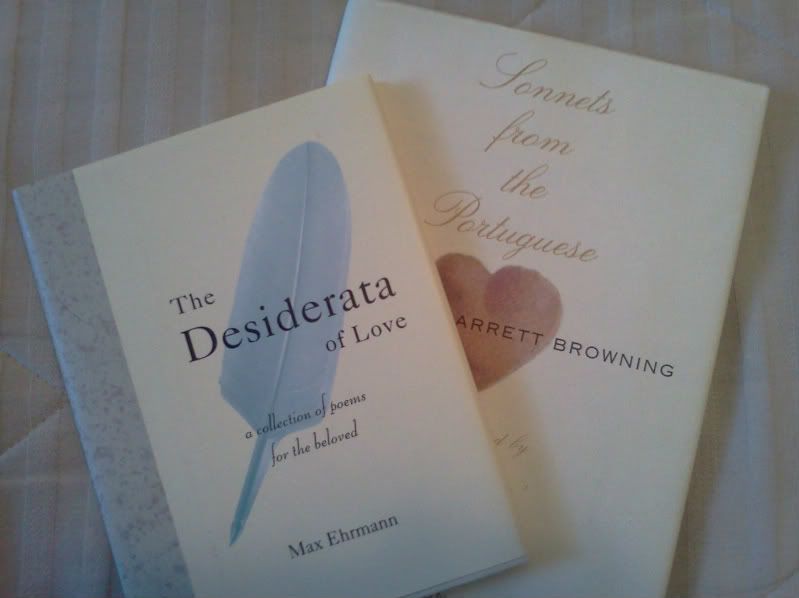
These inscriptions are not for you.

Nothing beside remains.

Some of the people who have given me books are no longer in my life. People change and drift apart. Time separates us. Wounds run too deep to heal. But the books, the words on my shelf, stand testament to what once was. 

The weight of the book, the smell of the paper, the intimacy of words written in ink; these connect me to times long gone in ways both concrete and insubstantial. They are brief visits with old friends, fleeting memories of love shared, evidence of affection given and received. These will always have a special place on my shelf and in my heart.

The lone and level sands stretch far away.


Thanks and apologies to Percy Bysshe Shelley

Wednesday, January 25, 2012

The Season, Explained

A reader recently asked me: "I read a Regency romance novel, and I saw 'the Season' mentioned several times. Is that something I'm supposed to know? Is that a real thing? What is it?"

Dearest reader, these are good questions, and I'm happy to answer them. For those new to Regency romance novels, you will stumble across this term, and knowing what it means will give you some clarity as you delve into the genre.

"The Season" was absolutely a real thing, not the invention of fanciful romance authors. It was the name given to the London social whirl which accompanied the spring session of Parliament. It started with the opening of the session--usually sometime in March--and ended in June.

Titled members of the aristocracy all held seats in the House of Lords. And so, every year, they commenced on a migration from far-flung corners of the nation like the slowest moving flock of geese you ever saw. They converged in London, the center of the known universe, as far as these people were concerned.

Once there, the men took up the important task of governing the nation and drinking in their clubs, while the ladies saw to the equally important tasks of shopping, catching up with friends, gossiping about social rivals, and hostessing parties.

For the next twenty minutes, I shall be scoring you on poise, conversation, physical attractiveness,
demeanor, biddableness, likelihood of conceiving, and whether you know the steps to this dance,
so as to judge your suitability for the esteemed station of my wife. Don't forget to have fun!


Besides passing laws, the real business of the Season was to arrange marriages. Since most everyone of the upper class lived on family estates in the country, the Season was the best opportunity a gentleman had to meet a wide variety of eligible misses.

Young noblewomen of marrying age were introduced to society at the beginning of the Season. A young lady new to Town first made her bow to the Queen, which entailed donning full court dress (complete with feathers in the hair, I kid you not) to make oneself presentable for Her Majesty. Upon being admitted to the Royal Presence, each girl curtsied to Queen Charlotte, who would acknowledge the introduction, thus giving her stamp of approval.

Debutantes were the fresh meat on the Marriage Mart, and their anxious mamas and chaperones did their best to throw them in the path of men deemed good catches. It was positively tragic to fail to catch a husband within a few Seasons. By the age of 25 or so, an unmarried woman was considered on the shelf, while a 30 year old unmarried woman was a confirmed spinster.

"Girl, you look so good!" "Ohmigod, so do you!" "Did you see
the ridiculous parasol Jane is carrying? It totally clashes
with her reticule! What was she thinking?" "I knoooow!"
Ladies and gentlemen were given ample opportunity to meet and socialize at balls, the theater, the opera, soirees, dinners, picnics, teas, musicales, and the five o'clock fashionable hour at Hyde Park, which was the place to see and be seen. London was replete with amusements for the privileged, and they took full advantage of the offerings to play long and hard for several frenetic months.


By early summer, Parliament wrapped up its business and the Season wound down. London was inhospitable in the summer months, as the stew of heat and unhygienic conditions led to frequent outbreaks of cholera and other dread diseases within the city. Naturally, the wealthy fled to the clean air of the countryside, leaving London to the unwashed masses.

The long months of rusticating in the country were broken up with occasional house parties and hunting trips, but these diversions were nothing compared the glorious thrill of the London Season.

I hope you can see how this mad rush of socializing and courting makes the perfect backdrop for Regency romance, which is why you'll so often find these novels set in London in the spring.

Saturday, January 21, 2012

Mick Jagger is a Lying Liar Who Lies

 My current earworm is the Stones' "Time is on my Side." Musical introduction!


As a too-long-to-be-parenthetical aside, I have to say that "earworm" gives me the heebie jeebies. The term does a marvelous job of evoking an absolutely horrifying image. It puts me in mind of the Babel fish, but 10,000% less useful. When I was a whippersnapper, we called it having a song stuck in your head, but I guess that's too many syllables these days.

Back to your regularly scheduled Mick defamation...

I've had this song stuck in my head for over a week now. The only line I know is "Tiiiiiiiiiiiiiime is on my side, yes it is," so that's been looping in my brain ad infinitum. It's pretty annoying, but it's given me an opportunity to reflect on the sentiment. Somewhere in the recesses of my brain, I'm aware that the song actually goes on to talk about a faithless lover coming back to the narrator, or something.

OK, so time might be on your side if you
have one of these. But you don't, do you?
I didn't think so.
But I'm not here to talk about faithless lovers. I'm here to talk about time. And how it is not, in fact, on my side. In high school, my junior year British lit teacher impressed the idea of carpe diem on us, and it's always stuck with me. I've done a lousy job of putting it into practice, even though I'm fully on board with the notion. Today, the Masters Boyce watched a Doctor Who episode in which the character Martha Jones relates this advice from her mother: "Never do tomorrow what you can do today." Her clone (I swear it makes sense in context) helpfully pitches in, "'Cause you never know how long you've got." -- i.e. Carpe the freaking Diem.

Lately, I've had a few experiences which have really driven this point home. We don't know how long we've got. And that doesn't even mean that gravity might reverse itself while I'm having my morning coffee and we all go sailing off into the void of space to meet our untimely ends at the hands of a merciless, airless, freezing / burning (depending on whether or not you're in the path of a wayward sun ray) vacuum.

Anything in the could happen. Debilitating diseases rob people of their ability to use their bodies. Financial catastrophe robs people of their dreams of seeing the world. Children grow up before you get to have them photographed in the smocked jumper Aunt Tilda so thoughtfully made you. Wheat crop collapse could rob you of your burning desire to make the world's largest strudel. You just never know what's around the corner. I could lose my hands in a tragic tooth brushing incident and never type again (Shut up, it could happen.).

You could fall asleep at an awkward angle and horrifying nocturnal gremlins could come during the night to sit on you and / or gape from the corner. YOU DON'T KNOW.

All we have for certain is right here, right now. This moment. What are you doing with it? Are you pursuing a dream--even if it's just getting your ducks in a row so you can actively go for it?--or are you coasting along in a rut, pushing all the things you want to accomplish to the back burner? We never know how long we've got. Even if I never accomplish some of the big things I want to do, I want to be able to say that I tried. That I gave it my best. That I was working on it. I don't want to come to the end of my time--however much that may be--and know that I squandered what I had.

Monday, January 9, 2012

Supercalifragilisticexpialidocious

There's a post title for Google to have fun with.

In any event, I planned to blog this morning, but I didn't really have a topic in mind. Usually, I sit down with a fair idea of what I'm going to write about, but not this morning.

I sat here sipping my coffee, willing the old neurons to start firing, but feeling that I just really didn't have anything to say. Just then, a wisp of a memory from childhood came floating to the surface. Something about not having anything to say. And then it hit me:

Supercalifragilisticexpialidocious

[Truth in advertising: I did not spell that on my own. Copy / Paste to the rescue.]

This is the word made famous by Mary Poppins, of course. To my deep shame, I have never read the novels, and so I must defer to the marvelous 1964 film as my sole source of canonical Poppins. In the film, young Jane Banks, speaking to her father, defines supercalifragilisticexpialidocious thusly: "It's something to say when you don't know what to say."

Musical interlude!


As Mary and Bert explain to us in song, you don't always have to know exactly what to say. Simply breaking the ice is often enough to get the words flowing, and next thing you know, you find yourself complimented with Edwardian kudos like, "There goes a clever gent!"

Relating this to writing, getting started is often the hardest part for me. Not just the beginning of a novel, but every writing session, every single day. I sit to write and spend several minutes just staring at the screen, with all the words trapped behind a dam of uncertainty. The best remedy for this is just to write. Anything. Even if it has nothing to do with my story. If I get the words going, my brain tends to wake up and move in the direction I want.

I've found the concept of supercalifragilisticexpialidocious works in a variety of situations besides conversation and writing: cleaning the house, planning a trip, getting on track with diet and exercise... Often, a task we wish to undertake feels overwhelming. We can't see how we'll ever get over the hill to the desired result on the other side. Just starting--somehow, anyhow--is often enough to help us overcome our fears and achieve our goals.

Supercalifragilisticexpialidocious. Give it a try.

Tuesday, January 3, 2012

New Year, New Ramble

Happy New Year, y'all! (I'm Southern. Deal.)  How were your holidays? Mine were super--thanks for asking!

If you listen well, I'll give you a butterscotch.
A Werther's, if you're really good.
Every year about this time, lots of people hit the ground running with their resolutions. I'm not much of a resolutionary, myself. Still, this time of year always brings to mind the one time I made a resolution and stuck with it. This is the story of how I became a novelist. Gather 'round the fire, children, and listen to my tale...

Books have amazed me from my earliest memories. They introduced me to fascinating people. Characters became my friends, or role models I looked up to, or villains I reviled. I went to new, marvelous places--Narnia, Middle Earth, Prince Edward Island, secret gardens, beyond the tollbooth, Wonderland. I traveled through time to see life as it was once lived, or how it may be lived someday. When I wasn't reading books, I played out their stories with my toys, or in my backyard with my sister and friends roped into carrying out my adaptations. Books captured me like nothing else.

l-r: Beverly Cleary, Louisa May Alcott, Roald Dahl
And the people who wrote them? Wizards. Gods. Idols. Untouchables. To be able to do this thing that words on a page could do... it was wonderful and totally mystifying. I had no idea how a person went about creating a novel, how to become a name on the cover of a book. I longed to join my authorial heroes on the shelf, but it seemed so out of reach, something that happened to other people, important people--not little Elizabeth from a small Southern town.

Through the years, I wrote lots of short stories, poems, and narrative essays, but the novel eluded me. It was too big. Too hard. I didn't know how to approach it.

Finally, in 2004, I made a New Year's resolution: This would be the year in which I wrote a novel. I still didn't know how, but I was determined to figure it out. I went to the repository of all knowledge, Barnes and Noble, seeking enlightenment and came away with this book, which promised to teach me how to write AND sell my first novel. Perfect! I figured this writing career thing was pretty much in the bag, since I am great at following instructions.

I hatched a far too autobiographical idea and built my first novel outline, then plunged into my first first draft. I dutifully kept track of how many pages I wrote each day. Mr. Boyce was so supportive. He took our young boys out of the house to give me quiet time to write.

After not too many months (Four? Five? I can't quite recall now.), I had a completed manuscript in hand and was ready to move on to the selling portion of my guidebook's program. I drafted a query letter and proceeded to carpet bomb the New York literary world with it. When my first rejection letter came, I was ecstatic. I'd been blooded. I was legitimate. Each rejection just brought me one step closer to acceptance, I reminded myself.

Then another rejection letter came. And another. And another. And fifty more after that. As it happened, no one wanted a coming of age novel about a plucky young woman in a small Southern town--at least, not one riddled with a contrived plot and rookie writing errors. Every rejection I received was well deserved. My manuscript was nowhere near close to publication-worthy. I know that now. Looking back, I cringe at the thought of that thing ever seeing the light of day.

Still, I'd gotten a taste of the process. I'd finished a novel manuscript and gone through the motions of submitting. I had a better idea of what this whole novel thing was about, and I was hooked.

I just have to keep spinning my... You know
what? Never mind. That's painfully lame,
even for me.
My first attempt wasn't published (Thank goodness!), but I wouldn't call it a failure, either. I learned so much from that first, terrible novel. It gave me the courage to explore and learn more about the craft of novel writing. It taught me to develop patience, to wait until my work is the very best it can be before submitting. I also learned to put a little distance between myself and my work. A rejection from an agent or editor isn't a judgment about me personally; it's a business decision.

I'm still plugging away, still taking baby steps toward finding a home for my novels. And I'll keep at it until I do find that home, and then I'll keep at it and build my career. There's nothing else I would rather do. In many ways, my resolution from 2004 holds strong, which is why I've stopped making new ones. It's the same resolution every year: This year, I will write and submit. That desire, that need, has never waned. It's the one resolution that stuck and changed my life.

How about you, readers? Tell me a story about how you became a whatever it is you became. Or tell me about your resolutions or why you never make them. It's a new year and it's cold outside. Sit by the fire and chat with us for a little while.

Thursday, December 15, 2011

Please Accept My Apology

On Monday morning, the eldest young Master Boyce woke up ill.

"I'm sorry you're not feeling well," I said as I tucked him back into bed.

Then the second one chimed in, his eyes gleaming with envy. "My stomach hurts, too!"

"I'm sorry to hear that," I murmured, shooing him along to breakfast.

He ate and got ready for school, all the while angling for a day off like his brother was getting. "I'm serious, my stomach hurts," he insisted. "I ate too much last night."

"I'm sorry," said I. "You'll feel better soon."

My son rounded on me. "Why do you keep saying that?" he snapped.

"What?"

"You keep saying you're sorry! Every time we're sick or we get hurt, you say you're sorry."

"Oh," I said, a little taken aback. "I'm... sorry."

He threw his hands up in frustration and stomped off to the bus, his annoyance at me driving away his phantom stomach ache.

* * *

I apologize a lot--or rather, I use the words of apology, when I don't really mean them, at all.

"Dear Fanny: I'm sorry to hear of the loss
of your best kid riding gloves. I'm sorry, too,
that Mr. Watlingworth has not come up to
scratch, as I fully expected him to have done so
by now. I'm sorry to report Lydia is still
behaving like the veriest hoyden. Sorrowfully yrs,
Libby
P.S. -- Do write soon!

I'm sorry.

I'm sorry for your loss.

I'm sorry you're sick.

I'm sorry you fought with your husband.

I'm sorry things are hard for you right now.

I'm sorry the restaurant was terrible.

I'm sorry you had a bad day at work.

I'm sorry for saying I'm sorry so much.

I don't mean it. What I mean is, "I feel sorrow on your behalf." "I empathize." "My heart is heavy for you." "I wish you weren't sick." "I acknowledge the injustice of your situation." "This should not have happened to you."

Those are the kinds of things I mean, but I use "I'm sorry" as a lazy shorthand.

Some people are really bothered by this misuse of "I'm sorry," though not as much as the use of a word I won't mention. More than once the reply to my "I'm sorry," has been something along the lines of, "Why? You didn't do it."

I know I didn't do it. That's not what I mean. I think everyone knows that's not what we "I'm sorry"ers mean. We're honestly trying to express sympathy, but some people don't respond well to it when it comes wrapped up as an apology.

So, why don't I just say what I mean? It's a linguistic rut, a thoughtless habit. But I'm going to try to be more conscientious about the words I use next time I feel "I'm sorry" trying to fall off my tongue.

Do you say "I'm sorry" as an expression of sympathy / empathy? Do you find it problematic? Let's discuss it in the comments!

Monday, December 5, 2011

Baby Elephants

Fear not, dear readers. I have not, in fact, fallen into the abyss. I got caught up in November madness with kid sports and Thanksgiving (How was yours, by the way? Ours was great; thanks for asking!) and then Mr. Boyce and I high tailed it out of town for one of those decade anniversary trips... Phew! Anyway, I have Returned in Triumph--over what, I couldn't say, but here I am. Ta-daaaaaaaa!

So, while catching up on the mountain of laundry that vacations produce, I was thinking about this terrible cliché one hears authors spout about their book being their baby, or how writing a book is like having a baby, or some variation thereof.

I hate that.

It isn't true, and I'll tell you why.

No.
Look, I've had a few babies in my time. Gestating a baby is rife with physical discomfort, but it's pretty low on the mental strain. Pregnancy is as much a biological process as growing fingernails, and you probably don't put much effort into making that happen, do you? Yes, parents-to-be absolutely worry and fret over their little ones, and there's a lot to do to prepare the nest for a baby's arrival. But, you don't have to think about actually making a baby. Gosh, can you imagine having to sit down and concentrate for hours at a time to form a baby's various internal structures and organs and choosing eye color and leg length and nose shape and... wow, I'm making myself tired just considering it. And the results wouldn't be pretty.

No, the baby will gestate just fine without any creative input from you, thankyouverymuch.

A novel, meanwhile, goes nowhere without the writer's full effort. Everything is created from scratch--the world, the characters, the plot. It's a heck of a lot of thinking work. And then there's the writing work. And the submitting work. And the marketing work. And the--hey, this is starting to sound more like a job than a baby.

Another point at which the book-as-a-baby analogy falls apart is the gestational period, ie, the time itself. That baby's only going to brew for so long. Thirty-eight to forty-two weeks in normal circumstances, and then, blammo! Evicted in a relatively brief rush of pain and effluvia. Hours (or days, for the unfortunate) later, and it's all over. Baby has arrived.

I put a lot of work into this one, but you can
have it for a reasonable advance, plus royalties.
The time frame for writing a novel varies from author to author. Some can hammer out a first draft in a few months. Others might take a year or more. Editing tacks on more time, and manuscripts can languish in the submission process for years (Ask me how I know. Actually, don't. It's too depressing.). I've known an author who was picked up by the first agent she submitted to, and more authors who rack up dozens of rejections before finally finding someone to represent their work. Then comes submitting (yes, again) to publishers. Editing (yes, again) with the publishing house's editor. Then sitting in queue for publication, and then--THEN! Oh, glorious day, publication. The book is finished and released to the world. It's over. No going back, no changing, no growing.

That baby, meanwhile, which you gestated and birthed in less than a year is going to continue to develop and grow and change and require your support and help and love for the next infinity.

Likening a book to a baby is too emotional for my taste. It gives the novel an unreasonable sense of importance in the grand scheme of things. I have manuscripts and I have children. The two are not even closely related.

Of course, I put heart and effort and sweat and tears and even a little blood (paper cuts!) into my novels. Of course, I want to see them out in the world for readers to enjoy. But in the end, writing is a job. Novels are the products of authors' hard work, ones we want to sell. Submitting is the process of applying for a paying job as a novelist.

Maybe some authors really do have similar feelings about their novels and their children, but not me. I have to give myself some emotional distance from the businessy side of writing; otherwise, I'd go mad. Gestating an actual baby for nine months is hard enough. I couldn't deal with the uncertainty and stress of submitting if I thought of each manuscript as a baby. Besides, what kind of mother sells her children?