Tuesday, September 13, 2011

Very Slightly Damp

While I have previously discussed words, and the many ways we love them, I must now turn my attention to the unpleasant topic of words, and the many ways we loathe them.

In my years of sharing my love of the written and spoken word with all and sundry, I have discovered a curious thing. It turns out not all people are enamored of all words the way I am. Rather, some people downright detest particular words. One seemingly innocuous word consisting of five inoffensive letters keeps appearing in these revelations of disgust. When spoken, it is whispered with the lips curled back, as though the speaker is trying not to vomit. Others try not to utter it at all. When I stumble upon the hated word by happenstance, I am met with a cringe, and a waving of hands, accompanied by a hissed, "Don't say that," while the speaker looks over his or her shoulder, as if I might have summoned Voldemort by uttering the befouled mot.

So, what is this loathsome bit of linguistic torment?


Trigger Warning for those afflicted by detestable words.


And if you are someone who A) Feels strongly about a particular word, and B) Has communicated to me your abhorrence of one, you might know what's coming.


This is your last chance to look away.


Truly.


The beastly word is:


Moist


Allow these adorable felines to soothe your distressed nerves.


I must admit, when I first encountered moist-hate, I thought it was an isolated thing, an eccentric quirk of a dear friend. I found it silly and endearing. After all, some of my favorite things are moist. Cake, for instance, or the warm towelette one is presented with at the end of a transatlantic flight. What could possibly be offensive about delectable pastries and refreshing towelettes? Then I learned another friend disliked the word. And then another. Befuddled, I turned to the Internet, certain I must just be trapped on some island of irrational word aversion. And this is what I saw:

Anyone with a word du jour is all right by me.


Gross? Worst? Dirty? This is a thing, this dislike of moist? Dear reader, you may color me stunned. Some more poking about revealed page after page and list after list of despised words. If moist wasn't on the list itself, it quickly appears in the comment sections. One can fall down a rabbit hole chasing links brimming with moist-hate.
The hatred hurts. Right here.

My heart knows no hatred when it comes to words. Each and every one has its proper place and usage, so this widespread loathing of dear little moist had me feeling like a loose sail flapping in the wind. I had to make sense of all the vitriol aimed at this word. Certainly, it may have to occasionally shoulder the adjectival burden of describing something unpleasant, such as "moist eczema" or "moist specimen" but then, eczema and specimens aren't always the most pleasant things, are they? And yet it's moist that takes the fall for doing its descriptive duty.

The only thing that could make my bruised heart feel better about the beating moist gets is a new, shiny word. I found one relating to the hatred of a specific lexeme.

Logomisia refers to a "strong dislike for a particular word (or type of word) based on its sound, meaning, usage, or associations." Of course, moist is thrown to the wolves in the example section of this link. Sigh.

Poor moist. I think I'll have some cake. While I do, discuss your own word aversions (or lack thereof!) in the comments.

Sunday, August 21, 2011

Medicine Man

There have been some health issues afoot in the Boyce household of late, so issues pertaining to doctors and medicine have been on my mind. So today we're going to take a peek at the Regency's version of the medical establishment. At the beginning of the nineteenth century, what we would collectively term the medical field consisted largely of three levels of practitioner: the physician, the surgeon, and the apothecary.

Physicians were the most socially prestigious of the three practitioners. Only physicians were granted the title "Dr." They typically came from genteel families who could afford educations for their sons. There were no medical schools in England and training, such as it was, was wholly academic in nature. Those who aspired to become physicians studied texts centuries (and sometimes millenia) old--not for historical perspective, mind you, but for actual professional guidance. The Royal College of Physicians licensed physicians, but an additional fellowship could be obtained by those who studied at Cambridge or Oxford. Most physicians practiced in London, where they could build up a clientele with money and social standing.


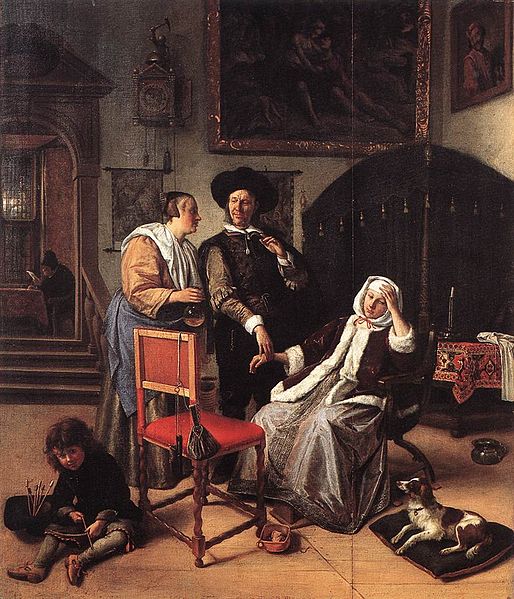
I deign to touch your wrist, but we will never speak of this again.
 The licensed physician, or "physic," was considered a gentleman and therefore not technically in trade. He did nothing that smacked of manual labor. When summoned by his wealthy clients, the physician merely took a case history and offered verbal consultation. He did not give physical exams, except, perhaps, to take the pulse at the wrist. He most assuredly did not deal with blood or bones or pustules, perish the thought. What he did do, was prescribe drugs. Lots of them. These prescriptions were filled by the apothecary, who we'll visit in just a moment.

Next down the medical totem was the real workhorse of Regency medicine, the surgeon. Unlike modern surgeons, the nineteenth century surgeon was not given the "Dr." designation in his name, only "Mr." There was no formal training to become a surgeon. A young man who wished to practice surgery carried out an apprenticeship, the same system through which blacksmiths and carpenters and every other manual laborer trained.

The local "sawbones" worked in the trenches of human suffering. He set broken bones and performed amputations and surgeries and bleedings. Many of his patients would die of infection after an operation, but bacteria and sanitation were not yet understood; he did his best with the knowledge available to him. The local surgeon was summoned in the middle of the night to attend the sick and almost certainly suffered every sort of indignity as he treated all manner of digestive complaints. Food poisoning was rife, as were ailments resulting from impure water and even contamination from storage containers. The surgeon was confronted with illnesses such as influenza and small pox, as well as chronic conditions like diabetes, arthritis, and gout.

An interesting historical tidbit: In the early nineteenth century, surgeons were legally prohibited from performing dissections on human corpses, except for the remains of executions. The papier-mâché models created for training purposes just weren't sufficient to teach real human anatomy. Necessity brought surgeons into partnership with the criminal element. Grave robbers, called "resurrection men," dug up freshly buried bodies and sold them to surgeons who used the corpses to expand their understanding of anatomy and disease.
The skeleton was a surprisingly able assistant.

Of course it will work! I wouldn't lie to you in this hat.
Also, I have an aloe plant, so you know I'm legit.
The third practitioner in the Regency medical world was the apothecary, the nineteenth century version of the modern pharmacist. He was most decidedly in trade, and had no social standing whatsoever. When a physician wrote out a prescription for a client, the apothecary filled it. He compounded medications from his store of minerals and herbs. Tinctures, ointments, salves, and extracts could all be purchased from the village apothecary. The ambitious apothecary might also concoct his own secret recipes to treat everything from itchy feet to heart arythmias. In small communities that lacked even a surgeon, an apothecary could be summoned to attend a patient. However, he was not allowed to charge for his medical advice--only for his medicines.

As the century wore on, the medical field evolved to give rise to the general practitioner, the doctor whose knowledge combined that of the physician and the surgeon. Getting there was slow going, however, and so the health of those who lived during the Regency was directly affected by the social status of the men who treated them.

Friday, July 22, 2011

Dressing for Work

My senior year in high school, I took AP English. It was a wonderful, mind expanding course of deep literary analysis and challenging texts. In memory, AP English ranks as the greatest class of my schooling--better even than my college literature courses, because it marked the biggest advancement in my life as someone who thinks about words and language and literature. I was in heaven. Ms Hilborn, wherever you are, thank you, from the bottom of my heart.

However, AP English wasn't just an excuse for a book lover like me to wallow in Dostoevsky and Beckett. The class was meant to count as college credit, to be awarded upon passing the AP exam at the end of the year. This was the first test I ever really lost sleep over. Even the SAT was just another standardized test in my mind. But the AP exam? That was a real test. Hours' worth of questions designed to test everything I'd ever learned about a single subject.

After last-minute drills in various Shakespeare works and the particulars of Theater of the Absurd, my teacher gave us practical advice for the day of our exam. Much of it was the same advice we'd all heard for years the day before a test: Get plenty of sleep; eat a good breakfast; use the bathroom before school starts.

Her final piece of advice was new to me. She told us to dress up a bit.

Statement pieces like a great necklace really
help pull a look together.
The reasoning behind her advice was this: The clothes we wear affect our thoughts and behavior. When we put on clothes different from the ones we normally wear, it changes how we act and how we think. Comfy sweats are great for lounging in front of the tv, but they lead to sluggish thoughts. If we dress in a way that is just a wee bit uncomfortable (on account of being different from our normal mode of dress), the mind is sharper and more alert. Putting on an outfit we know flatters us helps us feel more confident, and, in turn, act more confident.

This simple bit of behavioral psychology is behind the advice for job hunters to dress their best for an interview. Not only do our wardrobe choices affect the way we are perceived by others, but they affect the way we perceive and present ourselves.

For anyone who works at home, be you self employed or a telecommuter, the ability to dress comfortably is touted as a perk. With no co-workers popping in or meetings to physically attend, why not stay in pj's all day?

Well, for me, it goes back to the psychology of dressing myself. If I wear pajamas or grubby clothes, my mind just isn't as sharp as I want it to be. It's harder for me to write fiction when my clothes are contributing to a lazy frame of mind.

For those of us who only have ourselves to rely upon for the motivation to get a job done, think about how you're dressing for work. Do the clothes you're wearing make you feel professional, or are they keeping you mentally sluggish?

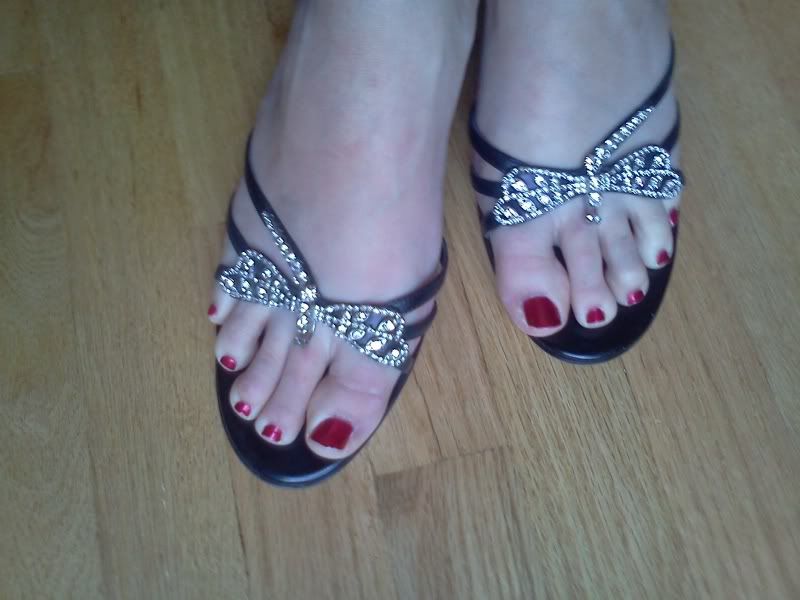
I have to admit that this summer I've been less disciplined with making sure I'm dressed to get work done, and you know what? I've achieved less in my writing than I would have liked. So, this morning, I fell back on my AP English teacher's advice. I put on some makeup, slipped on a dress, and even donned some slightly uncomfortable shoes. I'm ready to tackle the day and get some serious writing done.

Whimsical footwear is advised for romance writers.


The day of the AP English exam, I followed my teacher's advice. I got sleep, ate a good breakfast, and wore clothes just a bit nicer than what I normally wore to school. My classmates did the same. In a feat unmatched by any other AP course offered at our school that year, every one of us in AP English passed that exam.

Thursday, July 14, 2011

In a Sense

One of the many things I admire about language is the way a single word can encapsulate a whole concept. Take the English word "home," for instance. It refers to not just a physical domicile, but also to the emotions of belonging and peace we (hopefully) find there with our family and loved ones.

It's interesting to discover what concepts other cultures have captured in a word or phrase. Oftentimes, these words don't have a clean translation into other languages. The literal English translation of je ne sais quois is "I don't know what," but that's not quite what the phrase means. Someone or something possessed of je ne sais quois has allure and charisma and fabulousness that are hard to put into words.

Another French word the English language borrows is haute. It refers to the highest, the best of the best. We see it in haute cuisine, haute couture, and--if you're a reader of Regency romance--haute ton, which is the highest echelon of society. One could say "top cuisine," or "the best fashion," but those don't have the same sense as haute, which denotes an air of exclusivity and luxury, as well as a top ranking.

OMG, it's Jersey Shore. Change the channel, quick!
The German language is riddled with marvelous words that have no clean English equivalent. One that's become quite popular in the Internet age is Schadenfreude, which is delight at another's suffering. One that hits close to home for me is Fremdschämen. This is vicarious embarrassment on another's behalf, and is the reason I cannot watch reality television. I become terribly uncomfortable when I witness someone else behaving foolishly. They seem to have no shame, but I have plenty for us both. That's Fremdschämen.

What words--in English or in other languages--do you know that lack an equivalent in other tongues? Share them in the comments!

Tuesday, July 5, 2011

Gorging on Books

I started writing because I love books. Adore them. Fervently. I have stories of my own to share, and books, being indescribably awesome, are the medium through which I wish to share those stories. Sadly, writing fills up a lot of the time I used to spend reading. Research material gets reading priority these days, pushing my fiction picks to the bottom of the reading pile.

Sometimes I just have to take a break and recharge the creative juices with some novels. Novels are like that old Pringles ad... once I pop, I can't stop. I glut myself on them. Eventually, I stagger away from the books for the literary equivalent of a food-induced coma.

I'm the guy in the red hat.

I've just had a reading feast, and a delightful one it's been. Blue, by Lou Aronica, was totally unexpected. I'm not sure what I thought I was in for, but this was a wonderful surprise. It's a fantasy novel mashed up with a literary look at the bittersweet heartbreak of parenting and growing up and dying.

I read Water for Elephants. I tend to run 5-10 years behind in exposure to popular books, so I'm a total Johnny Come Lately on that one. I enjoyed it. Rosie the elephant is a fabulous character.

Next, I read a novella by new-ish author Courtney Milan, called Unlocked. It's an historical romance that takes place in 1840, the period between the Regency and Victorian eras. I don't read too many novellas, but I was impressed with how fully fleshed out the characters and story are. The shorter length of the piece didn't take away from the experience at all--it was as satisfying a read as a full novel. This was a charming, lovely romance, and I'll definitely be on the lookout for more from Ms. Milan.

Finally, I read the Sherlock Holmes story "The Sign of Four." I've been slowly working my way through The Complete Sherlock Holmes, reading stories here and there. Holmes is such a dark, complex character. In "The Sign of Four", we learn about his worrisome cocaine habit, as well as his generally low opinion of women and the institution of marriage. As ever, I am astonished by Doyle's intricate plot. If only my imagination were so clever!

Great fiction gives my creative brain a rest. It also gets me fired up and inspired and excited all over again about my own work, and how fantastic it'll be to someday see my novels in print. I'm ready to dive into the final push on my current manuscript, which I hope to have completed by the end of summer.

What are you reading? I'm always looking for a good book!

Tuesday, June 28, 2011

Pride and Prejudice and Please Make it Stop

Jane Austen penned six novels--two of which were published posthumously. Each has endured to see printing after printing, BBC adaptations, and dubious Hollywood retellings. Of the six, however, one Austen novel stands above the rest in fame:

Pride and Prejudice

There is no question of P&P's influence and staying power. More than any of Austen's other novels, P&P is the direct ancestor of the modern romance novel. It gives us a spunky heroine, a handsome and honorable hero and... the formula. I firmly believe that the Regency subgenre of historical romance is as booming as it is because of P&P. This novel is the gateway drug to Regency obsession.

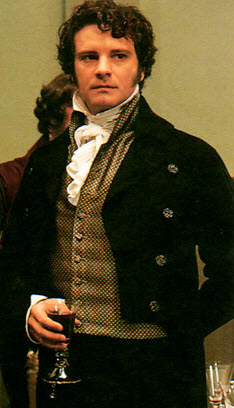
Hellooooo, Darcy. Rawr.
First published in 1813, the story of Elizabeth Bennet and Mr. Darcy has captured the hearts and imaginations of generations of readers. It was adapted for the stage in the 1930's, and for film in 1940. In addition to multiple feature-length films, there have been numerous miniseries adaptations. The 1995 BBC version, of course, makes millions of ovaries ache to this day at the very mention of Colin Firth.

As happens when people are smitten with a particular story, readers are left wondering, "And then what?" about their favorite characters. Fan fiction, in which an author other than the story's original teller imagines new adventures for characters, is a fun way to explore possibilities beyond The End. Most fan fiction remains unpublished. Occasionally it makes it to print.

When Scarlett: The Sequel to Margaret Mitchell's Gone With The Wind was published in 1991, it was a Very Big Deal. Fans of the original novel and movie adaptation held their collective breath and cringed in anticipation of what Alexandra Ripley had done to Rhett and Scarlett. Reviews of the new novel were published nation-wide--most of them highly unfavorable. Readers were not best pleased with Ms. Ripley's treatment of these beloved characters.

In light of that novel's poor reception, I am all astonishment at the cottage industry that has emerged of Pride and Prejudice-inspired novels. There are just. so. many. of. them. The original story has been told from Darcy's point of view. Elizabeth Aston has published seven P&P-related novels. At least one which I have personally read (the Althea Darcy novel) portrays Elizabeth and Darcy as absentee parents. Colleen McCullough gave us a novel in which Elizabeth and Darcy have a sexless, loveless marriage (and, in fact, Darcy regrets ever marrying beneath his station.). The Darcys are a mystery solving duo. They fight a P&P character now suffering with Dissociative Identity Disorder. And there are zombies. Which now have a prequel. And a film in development.

A search on Amazon.com for Mr. Darcy returns 571 hits. Try Pride and Prejudice Sequels.

She's spun in her grave so many times,
the threading is stripped.

Based on the sheer number of these novels, I can only assume they make money, which answers the question, "Why are they still being published?" But it doesn't answer another question: Why are authors still writing these books? Don't they have other stories to tell? Stories of their own?

I adore Pride and Prejudice. I truly do. I don't think you'll find a Regency Romance author who can't trace her love of the period back to Austen, and probably to P&P. And while I certainly take inspiration from novels I read, I, personally, would not wish to make an entire career directly based on someone else's work. Have we not yet exhausted the general scenarios for Darcy and Elizabeth fan fiction? Eventually, the market hits saturation point. Sales and readership start to decline. Are we there yet with Pride and Prejudice-inspired novels? Whether or not the market is, I am. I'm weary of seeing two of my favorite characters paraded out for stories that never live up to the original. I don't think I'll be picking up another any time soon--not when there are so many new characters on the shelves, just waiting for me to meet them.

What do you think, readers? Have you read any P&P sequels or retellings? Have any of your favorite novels received the same third-party sequel treatment? How do you feel about them? Let's discuss it in the comments!

Monday, June 20, 2011

And The Winner Is...

Squee!
A big thank you to everyone who participated in my first giveaway! I appreciate all the entries and following and sharing. You're the very best readers a girl could hope for. I wish I could send you all a prize for being so fabulous.

But, if we learned anything from Highlander, it's that there can be only one. So here we go. I'm heading over to random.org right now to select the winner. Are you ready? I'm nervous, but you totally shouldn't be, because you're a winner in my heart, no matter what.

OK, here goes.


The winner of Jane Austen's Guide to Good Manners is:


CARRIE!

Carrie, I will contact you all private-like to get your contact info. Your prize will be winging its way to you shortly. Thanks again to everyone who entered! I hope we can do this again soon.