Tuesday, November 8, 2011

Pansy

I have a difficult time naming things. One of my children was named while we drove to the hospital, just a few hours before he was born. Another's first name was finally settled on a day or two before she arrived, but she had to live the better part of two days without a middle name.

It seemed like a dignified choice at the time.
Pets haven't been any easier. At an early age, I turned to literature for companion animal monikers. Thus the cat six-year-old me dubbed Romeo. Scout, Sadie, and Marlowe followed over the years. The time I stepped away from literary inspiration, I wound up with a goldfish named Hubert.

It's just so hard for me to name things. A name is a word (or a sparse few) that is forever associated with that person, pet, or character. It isn't arbitrary, it encapsulates the very idea of a person. Sometimes a name just doesn't mesh well with who a person is. Margaret Mitchell originally named her heroine Pansy O'Hara. Can you imagine? Thankfully, her publisher convinced her to change the name, and Scarlett has been an icon ever since--fiery, feisty, passionate, bold. Scarlett. That's a great name.

Naming my own heroines hasn't been my primary difficulty, but the menfolk give me fits. My current work in progress was held up at the beginning of chapter two for nearly a week while I anguished over the hero's name. A Romance hero's name should be strong, and give a hint as to what kind of person he is (the heroine's, too, but I have an easier time with female names). You can't just slap any old name onto a character and expect it to fly. That'll never work!

Sometimes, writers will tell you their characters speak to them. I've seen author / character interviews, and my author buddies have occasionally mentioned something jolly their current favorite character said in passing. Frankly, I just nodded and smiled when I heard of such things. None of my characters has ever spoken to me. That is, until the day I tried to force a name on a hero. This particular hero (A different one than the above mentioned chapter two holdout. These guys kill me.) had driven me batty in the development stage. I knew so much about him--how he looked, how he spoke, the clutter on the desk in his study--but I didn't know his name. Finally, I decided to smoke him out. This hero is a gambler. Temperamental. Proud. Intense. Just to be spiteful, I told him he would be a hobbyist carpenter and that I was going to call him Howard. Clear as day, I heard him. "My name is Ethan, and I sail." Well. Alrighty then.

I thanked him kindly for his time. We never spoke of the carpentry kerfuffle again.

Friday, November 4, 2011

A Penny for the Old Guy


Remember, remember the fifth of November,
Gunpowder treason and plot.
I see no reason why gunpowder treason
Should ever be forgot.

-English folk verse


The Gunpowder Plot of 1605 is a fascinating incident in British history. You're probably familiar with the imagery of the Gunpowder Plot--the Guy Fawkes mask, bonfires, effigies, fireworks. In the United States (and perhaps elsewhere), the details of the plot itself are not as commonly known, so I thought I'd provide a brief and woefully inadequate overview of the Plot.

English Catholics had suffered intense legal and social persecution during the rein of Elizabeth I. When James I succeeded her in 1603, Catholics hoped the new monarch would undo these injustices. The son of the Catholic Mary, Queen of Scots, James did hold personal views much more tolerant than Elizabeth, but his administration brought about no official changes. Tired of waiting for a Protestant government to grant Catholics relief, Robert Catesby (who had previously taken part in the Essex Rebellion) devised a plan to topple the British establishment. 

Honestly, that mask could be the face of any one of these guys. Except for metro over there
on the left.


Nine seemed much older back then.
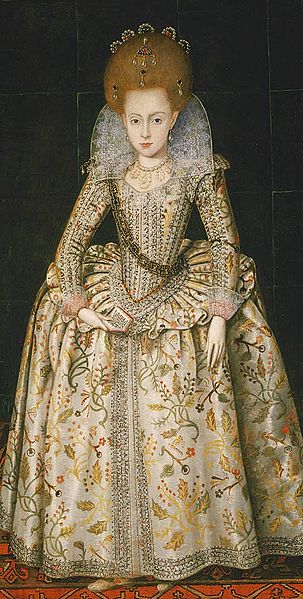
Catesby's goal was simple: Obliterate the Protestant English government and install a Catholic head of state. To achieve this goal, he and his co-conspirators planned to detonate a stockpile of gunpowder beneath the House of Lords during the State Opening of Parliament, November 5, 1605, when the king and the entire House of Lords would be assembled in one room. With the mass assassination accomplished, they planned to install James' daughter, nine-year-old Princess Elizabeth (Not to be confused with Elizabeth I, who was already deceased. Zombie monarchs rarely work out as well as you'd hope.) as a Catholic queen.


Throughout the spring and summer of 1605, the conspirators set the stage for their coup d'état. They leased an undercroft directly below the House of Lords and purchased the gunpowder required to demolish the building above. Catesby delegated responsibility for the explosives to a devout Catholic and military veteran, a gentleman by the name of Fawkes.

Guy Fawkes is the name most commonly associated with the Gunpowder Plot, because it was his arrest and subsequent torture and interrogation that led to the complete unraveling of the conspiracy. Things went bad when William, Baron Monteagle received an anonymous letter on October 26, 1605, warning him not to attend the State Opening of Parliament. An investigation commenced at once to discover the source of the threat. Just after midnight on November 5--only hours before the scheduled State Opening of Parliament--Guy Fawkes was discovered in the undercroft below the House of Lords, in the company of 36 barrels of gunpowder and a fuse.

In the days that followed, Fawkes and his co-conspirators were arrested, tried, and executed for treason. As I noted previously, Catholic emancipation did not take legal effect in England until 1829. Following the Plot, tighter laws were passed to curtail Catholic religious observance and legal rights. In January of 1606, Parliament passed the Observance of 5th November Act 1605. The Act declared November 5 an annual, public day of thanksgiving for the failure of the Gunpowder Plot. Initially observed with sermons and other boring services leading up to the iconic Bonfire Night festivities, it has since evolved into an excuse to set off fireworks, hang out around a big fire, and drink with friends.

The sinister smile of freedom.
I would be remiss if I did not point out that the Gunpowder Plot conspirators did not wish to create a religiously tolerant England. Rather, they hoped to revert England to a papist state--essentially turning the persecution tables on the Protestant population. Nevertheless, Bonfire Night was observed with decidedly anti-authoritarian tones in pre-Revolutionary Boston. The Guy Fawkes mask has been adopted as a symbol of anti-establishment sentiment thanks to the graphic novel V for Vendetta and its 2006 film adaptation. Most recently, both the hacking group Anonymous and Occupy protesters around the world have donned the mask as a sign of rebellion and group solidarity.

Like all political movements, the Gunpowder Plot of 1605 will continue to take on new meanings and interpretations as time passes. For some, the conspirators were regicidal traitors. For others, they were freedom fighters taking a stand against tyranny.

What would have happened if Guy Fawkes had not been arrested in the early morning hours of November fifth? Would the Plot have succeeded in killing James I and everyone inside the House of Lords? Oh, yes.

Tuesday, November 1, 2011

Alone

Saturday morning, I woke up bright and early, pressed the coffee, and turned on the computer, as is my custom. My intention had been to cancel an unwise Amazon order I'd placed the previous evening in a fit of nostalgia and Ambien. When I opened the browser and fired up my email program, I noticed things were running sluggishly.

And by sluggishly, I mean not at all. Page Cannot Load. Server Not Found. Flagrant System Error.  I turned to my husband still lying abed. "Hey, we don't have any internet," I informed him. He told me he'd go buy a carton of it later and rolled over.

A short time later, Mr. Boyce declared our household internet service dead in the water. This was bad news, as Chez Boyce is highly dependent on the internet. We use it for the computer, obviously, but also for our home phone and streaming entertainment to the television. Without the internet, we had been dropped into a virtual oubliette.

We had to wait until Monday for help, so we hunkered down for a weekend sans web. Saturday passed slowly. I kept thinking things like, Since I can't check Facebook, I'll just look up that recipe I've been meaning to try. Oh, wait. It's on the internet. Then I'd decide to call a friend, instead, but I couldn't do that, either, because we had no internet. I could still use my cell phone to text, thankfully, but bite-sized morsels of conversation aren't very satisfying.

Sunday wasn't any better. It's strange to realize how much you rely on something only when it's gone. I read and worked some puzzles and took a nap. Mr. Boyce kept wandering into the room where the modem lives to watch its lights flicker.

By Sunday night, despair had begun to sink in. We were alone. Stranded on a deserted island in the middle of suburbia. It felt as if we had always been isolated like this, and that we might never contact the outside world again.

After some hours, my tears ran dry.

On Monday, Mr. Boyce got word that help was on the way. Someone was coming in a life boat / cable company van. We arranged our afternoon to make sure one of us was here every moment to meet our rescuer.

The promised help never arrived.

Bitter and betrayed, we gathered the tatters of our dignity about ourselves. We didn't need the internet, anyway, I declared. We were fine without it. Just fine. I helped the Boycelings get ready for Trick-or-Treating. We had a fun evening walking the neighborhood, saying hello to neighbors, and congratulating children on clever costumes.

I realized we could still be connected without the internet--if on a much smaller scale. I arrived at a place of peace about our lack of internet. Of course, it was vexing to not be able to dial 911 in case of emergency, but we could always run to the neighbor's house if necessary. We have neighbors, a fact I sometimes forget as we isolate ourselves inside our house, connecting to everyone in the world except for the other humans in our physical proximity.

Today, obviously, the life boat arrived. I rolled out the red carpet as my hero replaced our terminally vegetative modem with a new, lively one. So here I am, reconnected. No longer alone. Alone as ever.

Thursday, October 27, 2011

Finding Your Voice

Authorial voice. What the heck is it, what's it good for, and how do you get your own?

For writers, voice is a word we see in critiques and in submission guidelines under What We're Looking For, along with great plots and relatable characters.

For readers, voice is something to discuss at book club. Ultimately, it's what draws you into a story and keeps you there.

A strong, clear authorial voice is an asset to both writers and readers.

What the heck is it?

In writing, voice is simply the way an author speaks on the page. It's the summation of word choice, syntax, rhythm, and so forth.

What's it good for?

An author's voice is unique to that individual. It's how we distinguish ourselves from other writers.

To illustrate, here are brief passages from two nineteenth century novels:

Example one: Summer passed away in these occupations, and my return to Geneva was fixed for the latter end of autumn; but being delayed by several accidents, winter and snow arrived, the roads were deemed impassable, and my journey was retarded until the ensuing spring. I felt this delay very bitterly, for I longed to see my native town and my beloved friends. (Frankenstein, by Mary Shelley, first published in 1816)

Example two: The first part of their journey was performed in too melancholy a disposition to be otherwise than tedious and unpleasant. But as they drew towards the end of it, their interest in the appearance of a country to which they were to inhabit overcame their dejection, and a view of Barton Valley as they entered it gave them cheerfulness. (Sense and Sensibility, by Jane Austen, first published in 1811)
This sweet face authored your earliest
nightmares.

These passages are similar in both topic and theme (travel, unhappiness), and were published only five years apart. Though there are just two sentences in each passage, Shelley's feels as if there are more, due to the rhythm she creates with punctuation. The first sentence has six phrases separated by commas or semicolon. By contrast, Austen's long sentence (the second one) has only three phrases separated by commas. Shelley's pacing invites the reader's eyes to linger, while Austen's sentences can leave the reader feeling like she needs to catch her breath when she finally reaches a period. Shelley's writing employs plainer words, while Austen tends to the florid.

Despite the similarities in these two brief passages, there are sufficient differences--thanks to each authorial voice--that the two would not be confused as coming from the same writer.

This ability to distinguish oneself from other authors through a strong voice is especially important in genre fiction, such as Romance or Mystery, in which many other writers are telling similar stories. Off the top of my head, I can tell you the stand-out characteristics of a handful of Romance authors--and all those traits relate to voice. Wittiness or concise writing or lyrical prose will appeal to different readers, and keep the ones who appreciate that voice coming back for more.

How to develop a voice of your own

Whether you write a blog, a novel, a poem, or indignant letters to the editor, finding and using your authorial voice is important. How do you do that?

The good news is that, to an extent, your voice comes naturally. You probably never put a lot of thought into your conversational speaking voice. The words you choose to use, whether you inject your speech with sarcasm or humor, these are things that come naturally to you. So, too, will your writing voice.

Try it with a little Ozzy this time.
Write in the way that feels most comfortable. Don't try to force yourself to be something you aren't. For instance, I adore good snark when I'm reading a piece, but that's just not how I write. I can inject some levity into my own work, but I will never be a humorist. Follow your natural inclinations where they lead.

If you just aren't sure what your voice is like, try out different styles of writing. Maybe your prose is witty like David Sedaris, or stark like Hemingway. Try on various styles and see what fits. Be aware that your authorial voice might be dissimilar from your speaking voice, or they might be nearly identical. The two are different animals, though, so don't try to force your writing voice to be the same as your speaking voice.

Finally, write, write, write. The more you write, the more comfortable you will become with your voice, and the clearer it will be. Just as a young singer may have a sweet singing voice, it takes effort and practice to hone that voice into a clean, unique instrument.

Sunday, October 23, 2011

Growing (Vocabulary) Pains

Watching children grow is bittersweet, as any parent will tell you. It's so exciting to watch those first steps, to see that first tooth, to run beside them on their first bike. Yet there's sadness, too, at leaving earlier stages behind. Those little infants I held in my arms and recited poetry to turned into toddlers who couldn't wait to run away from me at the park. The fact that they always come running back again doesn't quite soothe the hurt of the initial running away. I know that they'll never be mine quite as much as they were before. And so it goes, day after day and stage after stage. Growing and changing and moving farther away from me.

Soon enough, she'll inform you that
she never asked to be born.
The physical development of children is one thing, but it's their cognitive development that'll really break your heart. Since I'm blogging about it, of course I'm thinking about words. Their words. A child's words.

Children discover the power of words alongside learning to roll over or hold a spoon. They learn their name is a special word that refers only to themselves. They learn that calling to Mama by name will summon her as effectively as crying. Words empower children to describe the world around them and to express the world within them.

Inevitably, though, children will wield words as weapons. Their efforts at word hurling can be humorous in the beginning. It's hard to take a tiny tyrant seriously when she screams that you're a stinkyhead.

Giggle as we might, however, children deep down know that words can be just as painful as a physical blow. A child will report an incident of name calling as quickly as they tell on another child for slapping. Parents must teach children to speak kindly, just as we teach them not to hit.

 All the while a child is learning how to express himself in words, he is also learning to respond to the words of others. Hearing that he is loved, or clever, or has done something well gives a child joy. Children crave those words of encouragement and affection. Such verbal affirmations help children feel safe and secure.

A mother's pipe dream


On the other hand, sadly, children feel pain when hurtful words are thrown at them. Holding my son in my arms while he wept over the terrible things a friend said to him is one of the most trying things I've gone through as a parent. Cuts and scrapes can be washed and bandaged. Illness can be treated with medicine. But once someone hurts your child with words, there's no magic mommy kiss to make it better. All you can do is try to ameliorate the damage. Eventually, they move past it--a little tougher, a little wiser, a little less innocent.

Such incidents have happened, and will happen, again. And again. The words a child hears subtly change who they are and who they become. Even after a child develops the coordination to stop tripping over her own feet most of the time, she will still cause and receive hurt with words. Childhood tantrums become adolescent breakup speeches become adult sharing bad news. We carry the tantrums and breakup speeches and gossip and name calling with us, too, forever hurting one another. Words are the childhood trauma none of us escape.

Friday, October 14, 2011

Octobery

October is my favorite month. November is a close second, but October is tops in my heart. It's my birthday month, but it isn't just the promise of my beloved cake that makes October so special. We'll get to some of the other amazing things about October shortly, but I had to share this word-related information with you first.

Every year, I wonder about the origins of the name "October," so I go read about it and it makes my brain hurt so I willfully forget until next year when I start the cycle all over again.

Is that guy's tunic doing what I think
it's doing?
October carries the Latin root octo, which means "eight." You may have noticed that October is the tenth month of the year, but it wasn't always. In the old Roman calendar, there were ten months in the year, of which October was the eighth. Now it's the tenth of twelve, but we still call it Eight. Got it?

Lots of the other months have cool etymologies, like the names of gods (Janus, Mars, Maia, Juno); or the names of historical figures (Julius and Augustus); or just really awesome words. February is named for the Roman purification festival Februa, and April comes from the Latin word aperire, which means "to open," on account of all the blossoming flowers and whatnot.

Then autumn rolls around, and we have September (septem = seven), October (octo = eight), November (novem = nine), and December (decem = ten). Numbers. And not even the right ones anymore. When January and February were tacked onto the beginning of the year, evidently no one could be bothered to renumber the calendar, or come up with any other deities or persons worth honoring with their own months.

So, that's all kind of dry. And wrong.

*Blind warrior woman and sword
sold separately.
Heaped on top of the wrong-number-for-a-birth-month-name thing, I was also born under the zodiac sign Libra, the scales. Of the whole zodiac, Libra is the only inanimate symbol. Everyone else gets scorpions and lions and virgins, but I got stuck with a side table decoration from Pier 1. I don't put any stock in zodiac stuff, but scales just aren't as inspiring as a crab, you know?

But there's lots of great stuff about October, too, which make it the very best.

There's the fact that it isn't summer. I live in the South, and summer here is pretty much hell. Hot temperatures combine with high humidity to stew us in our own sweat. Summer kicks in somewhere around Easter, and doesn't let up until late September. We just experienced one of the most brutal summers on record. The current temperatures still aren't what most people consider fall-like, but at least we're out of the triple digits until next year. October means an end to the homicidal weather. The cooler days invite us to leave our air-conditioned caves and come outside again.

October means Oktoberfest which means German food and beer. Beat that, June! Oh wait, you can't.

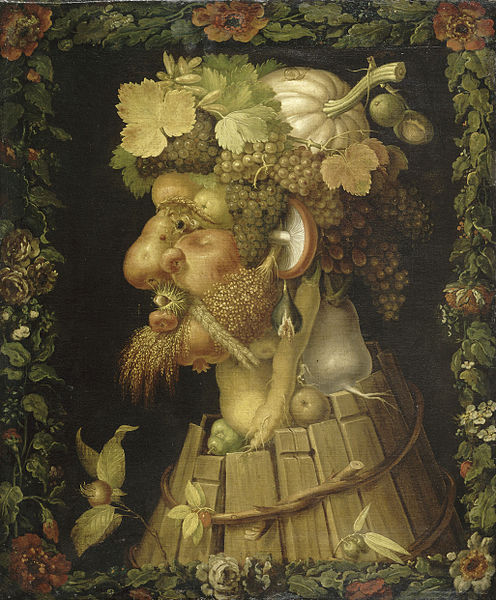
Pretty leaves.

Pretty leaves!


There's a feeling of good will in the air. It's all harvesty and bountiful and generous. We're not cranky from the summer heat anymore. The children are back into the swing of school, and the holidays are just around the corner. Looking forward to the good times on the horizon puts a spring in my step.

Halloween is so much fun. I love to see the kids in their costumes, dashing madly from house to house to accumulate their sugar horde. Plus, you can leave a pumpkin uncarved and it'll transition from Halloween to Thanksgiving. Pennywise porch decorations make me happy.


This gentleman knows how to get into the seasonal spirit.

Enjoy the rest of your October, dears. I know I will.

Tuesday, October 11, 2011

Breast Cancer Awareness, Regency Style

Every October, pink merchandise shows up on store shelves, and pink ribbons appear on media personalities. Pink has become a color of the season almost as much as the oranges and burgundies marking the trees as the year turns.

Instead of pink-washing the Ball to show my support for breast cancer awareness, I thought  we'd take a look at how a woman of the Regency era may have confronted this disease.

To begin, cancer has been recognized since ancient times. The oldest recorded observations of cancer come from Egypt, in approximately 1600 BC. The Greek physician, Hippocrates, theorized that cancer was caused by an imbalance in the four humors: blood, phlegm, yellow bile and black bile. An excess of black bile was the cause of cancer, Hippocrates believed. The second century Roman doctor, Galen, agreed with the Hippocratic view and declared cancer to be incurable. He allowed that some breast cancers could be treated by the surgical removal of tumors, but since surgery itself carried grave risks--and because the cancer often returned--operations were rarely attempted.

Galen's writings remained medical gospel for more than a thousand years, his theories unchallenged. At the time of the Regency, many physicians, surgeons, and apothecaries still accepted the four humors theory of health, which is why blood letting was practically a national pastime for centuries.

More fun than cricket.

In the seventeenth and eighteenth centuries, the involvement of underarm lymph nodes in breast cancer cases was discovered, although removing them during surgery was tricky business and not usually attempted.

By the mid-eighteenth century, modern-minded surgeons had abandoned the humors theory of cancer, and brainstormed new ideas. It was observed that sometimes multiple women in the same household developed breast cancer. This led to the conclusion that cancer is contagious. Cancer patients were isolated in hospitals to prevent the spread of the disease.


Did you hear about Old Man Hunter? He's
got this crazy idea about mothers passing
a predisposition for breast cancer to their
daughters. Did you ever???
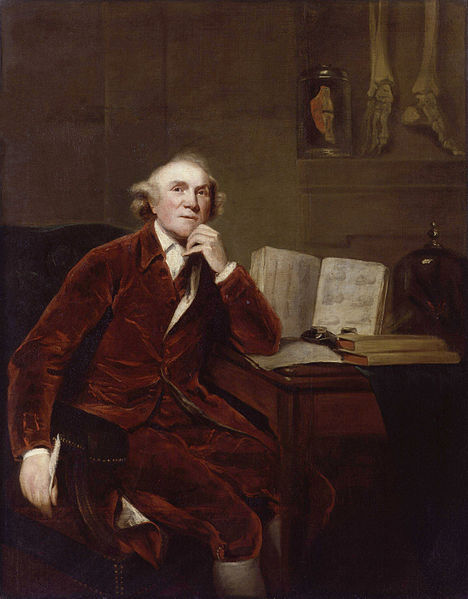
The eminent Scottish surgeon, John Hunter (1728-1793), was among a group of surgeons who arrived at a different conclusion when confronted with the above scenario: hereditary disposition. Today, we understand the genetic inclination for breast cancer between generations. In the 1700's, however, Mr. Hunter's notion was controversial and dismissed by traditionalists as phooey.

So, what could a Regency lady expect when this terrible disease struck? If she had the financial resources to choose treatment, she would decide whether to first consult a physician or a surgeon (I previously explored the British medical hierarchy here.) A physician would not conduct a physical exam, but he would suggest a course of medication.

There also arose a subset of physicians and apothecaries who claimed to be able to cure cancer with their proprietary concoctions. Arsenic was a popular choice, the idea being to fight fire with fire--or in this case, poison with poison. A recipe called Plunkett's Poultice included the following ingredients: Crow's foot, dogfennel, brimstone [sulfur], and white arsenic. The ingredients were ground together into a powder, then mixed with an egg yolk to make a paste, which was applied to the cancer site and covered with bandages. As you might imagine, arsenic-laced medications did nothing to cure cancer, and actually hastened the deaths of quite a few patients.

Surgery was also an option, and the area of medicine which showed the most success and progress in the late 1700's and early 1800's in the treatment of breast cancer. Unfortunately, surgery was carried out without the benefit of anesthesia or effective pain relief medications. Post-surgery infections were common, and blood loss during an operation was an additional risk. Lumpectomies and mastectomies were performed to ensure what John Hunter called the removal of the "whole disease." He urged close inspection of the removed tumors to ensure they were intact. Regarding a particular case, he said, "I considered that the bad success arising from amputation of the breast arose from not taking away enough." A post-op inspection of the excised tumor revealed it was not intact. Two weeks later, another surgery was performed to remove the remaining cancer.

Okay, a little bit of pink.
One of Hunter's colleagues, Henry Fearon, advocated the early removal of breast cancer--another idea centuries ahead of its time. In a 1784 publication entitled A Treatise on Cancers with a new and scientific method of Operating, Fearon laments: "In most cancers (those of the breast especially) internal ulceration takes place long before the skin shews any tendency to ulceration [...] It is unfortunately the case, that patients can seldom be convinced that there is any necessity for an operation while the disease continued in a mild state; whereas, that is beyond all doubt, the most favorable period for extirpating it." [source]

The Regency breast cancer patient had limited options for treating her disease. As today, some of the brightest minds in medicine and science worked diligently to find effective treatments, while charlatans preyed on the vulnerable. Our chances of successfully fighting this disease are much greater now thanks to the work of John Hunter, Henry Fearon, and all the other surgeons who developed pioneering surgical techniques. But as Mr. Fearon said, early detection and treatment is the key to success.

Consider yourself aware.