Thursday, December 15, 2011

Please Accept My Apology

On Monday morning, the eldest young Master Boyce woke up ill.

"I'm sorry you're not feeling well," I said as I tucked him back into bed.

Then the second one chimed in, his eyes gleaming with envy. "My stomach hurts, too!"

"I'm sorry to hear that," I murmured, shooing him along to breakfast.

He ate and got ready for school, all the while angling for a day off like his brother was getting. "I'm serious, my stomach hurts," he insisted. "I ate too much last night."

"I'm sorry," said I. "You'll feel better soon."

My son rounded on me. "Why do you keep saying that?" he snapped.

"What?"

"You keep saying you're sorry! Every time we're sick or we get hurt, you say you're sorry."

"Oh," I said, a little taken aback. "I'm... sorry."

He threw his hands up in frustration and stomped off to the bus, his annoyance at me driving away his phantom stomach ache.

* * *

I apologize a lot--or rather, I use the words of apology, when I don't really mean them, at all.
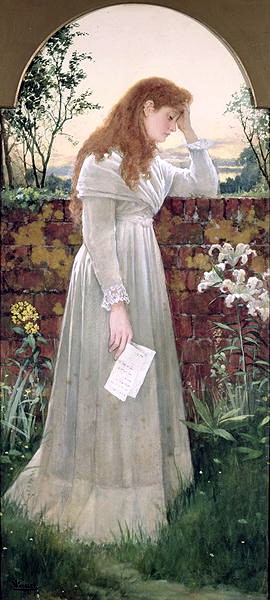
"Dear Fanny: I'm sorry to hear of the loss
of your best kid riding gloves. I'm sorry, too,
that Mr. Watlingworth has not come up to
scratch, as I fully expected him to have done so
by now. I'm sorry to report Lydia is still
behaving like the veriest hoyden. Sorrowfully yrs,
Libby
P.S. -- Do write soon!

I'm sorry.

I'm sorry for your loss.

I'm sorry you're sick.

I'm sorry you fought with your husband.

I'm sorry things are hard for you right now.

I'm sorry the restaurant was terrible.

I'm sorry you had a bad day at work.

I'm sorry for saying I'm sorry so much.

I don't mean it. What I mean is, "I feel sorrow on your behalf." "I empathize." "My heart is heavy for you." "I wish you weren't sick." "I acknowledge the injustice of your situation." "This should not have happened to you."

Those are the kinds of things I mean, but I use "I'm sorry" as a lazy shorthand.

Some people are really bothered by this misuse of "I'm sorry," though not as much as the use of a word I won't mention. More than once the reply to my "I'm sorry," has been something along the lines of, "Why? You didn't do it."

I know I didn't do it. That's not what I mean. I think everyone knows that's not what we "I'm sorry"ers mean. We're honestly trying to express sympathy, but some people don't respond well to it when it comes wrapped up as an apology.

So, why don't I just say what I mean? It's a linguistic rut, a thoughtless habit. But I'm going to try to be more conscientious about the words I use next time I feel "I'm sorry" trying to fall off my tongue.

Do you say "I'm sorry" as an expression of sympathy / empathy? Do you find it problematic? Let's discuss it in the comments!

Monday, December 5, 2011

Baby Elephants

Fear not, dear readers. I have not, in fact, fallen into the abyss. I got caught up in November madness with kid sports and Thanksgiving (How was yours, by the way? Ours was great; thanks for asking!) and then Mr. Boyce and I high tailed it out of town for one of those decade anniversary trips... Phew! Anyway, I have Returned in Triumph--over what, I couldn't say, but here I am. Ta-daaaaaaaa!

So, while catching up on the mountain of laundry that vacations produce, I was thinking about this terrible cliché one hears authors spout about their book being their baby, or how writing a book is like having a baby, or some variation thereof.

I hate that.

It isn't true, and I'll tell you why.

No.
Look, I've had a few babies in my time. Gestating a baby is rife with physical discomfort, but it's pretty low on the mental strain. Pregnancy is as much a biological process as growing fingernails, and you probably don't put much effort into making that happen, do you? Yes, parents-to-be absolutely worry and fret over their little ones, and there's a lot to do to prepare the nest for a baby's arrival. But, you don't have to think about actually making a baby. Gosh, can you imagine having to sit down and concentrate for hours at a time to form a baby's various internal structures and organs and choosing eye color and leg length and nose shape and... wow, I'm making myself tired just considering it. And the results wouldn't be pretty.

No, the baby will gestate just fine without any creative input from you, thankyouverymuch.

A novel, meanwhile, goes nowhere without the writer's full effort. Everything is created from scratch--the world, the characters, the plot. It's a heck of a lot of thinking work. And then there's the writing work. And the submitting work. And the marketing work. And the--hey, this is starting to sound more like a job than a baby.

Another point at which the book-as-a-baby analogy falls apart is the gestational period, ie, the time itself. That baby's only going to brew for so long. Thirty-eight to forty-two weeks in normal circumstances, and then, blammo! Evicted in a relatively brief rush of pain and effluvia. Hours (or days, for the unfortunate) later, and it's all over. Baby has arrived.

I put a lot of work into this one, but you can
have it for a reasonable advance, plus royalties.
The time frame for writing a novel varies from author to author. Some can hammer out a first draft in a few months. Others might take a year or more. Editing tacks on more time, and manuscripts can languish in the submission process for years (Ask me how I know. Actually, don't. It's too depressing.). I've known an author who was picked up by the first agent she submitted to, and more authors who rack up dozens of rejections before finally finding someone to represent their work. Then comes submitting (yes, again) to publishers. Editing (yes, again) with the publishing house's editor. Then sitting in queue for publication, and then--THEN! Oh, glorious day, publication. The book is finished and released to the world. It's over. No going back, no changing, no growing.

That baby, meanwhile, which you gestated and birthed in less than a year is going to continue to develop and grow and change and require your support and help and love for the next infinity.

Likening a book to a baby is too emotional for my taste. It gives the novel an unreasonable sense of importance in the grand scheme of things. I have manuscripts and I have children. The two are not even closely related.

Of course, I put heart and effort and sweat and tears and even a little blood (paper cuts!) into my novels. Of course, I want to see them out in the world for readers to enjoy. But in the end, writing is a job. Novels are the products of authors' hard work, ones we want to sell. Submitting is the process of applying for a paying job as a novelist.

Maybe some authors really do have similar feelings about their novels and their children, but not me. I have to give myself some emotional distance from the businessy side of writing; otherwise, I'd go mad. Gestating an actual baby for nine months is hard enough. I couldn't deal with the uncertainty and stress of submitting if I thought of each manuscript as a baby. Besides, what kind of mother sells her children?

Tuesday, November 8, 2011

Pansy

I have a difficult time naming things. One of my children was named while we drove to the hospital, just a few hours before he was born. Another's first name was finally settled on a day or two before she arrived, but she had to live the better part of two days without a middle name.

It seemed like a dignified choice at the time.
Pets haven't been any easier. At an early age, I turned to literature for companion animal monikers. Thus the cat six-year-old me dubbed Romeo. Scout, Sadie, and Marlowe followed over the years. The time I stepped away from literary inspiration, I wound up with a goldfish named Hubert.

It's just so hard for me to name things. A name is a word (or a sparse few) that is forever associated with that person, pet, or character. It isn't arbitrary, it encapsulates the very idea of a person. Sometimes a name just doesn't mesh well with who a person is. Margaret Mitchell originally named her heroine Pansy O'Hara. Can you imagine? Thankfully, her publisher convinced her to change the name, and Scarlett has been an icon ever since--fiery, feisty, passionate, bold. Scarlett. That's a great name.

Naming my own heroines hasn't been my primary difficulty, but the menfolk give me fits. My current work in progress was held up at the beginning of chapter two for nearly a week while I anguished over the hero's name. A Romance hero's name should be strong, and give a hint as to what kind of person he is (the heroine's, too, but I have an easier time with female names). You can't just slap any old name onto a character and expect it to fly. That'll never work!

Sometimes, writers will tell you their characters speak to them. I've seen author / character interviews, and my author buddies have occasionally mentioned something jolly their current favorite character said in passing. Frankly, I just nodded and smiled when I heard of such things. None of my characters has ever spoken to me. That is, until the day I tried to force a name on a hero. This particular hero (A different one than the above mentioned chapter two holdout. These guys kill me.) had driven me batty in the development stage. I knew so much about him--how he looked, how he spoke, the clutter on the desk in his study--but I didn't know his name. Finally, I decided to smoke him out. This hero is a gambler. Temperamental. Proud. Intense. Just to be spiteful, I told him he would be a hobbyist carpenter and that I was going to call him Howard. Clear as day, I heard him. "My name is Ethan, and I sail." Well. Alrighty then.

I thanked him kindly for his time. We never spoke of the carpentry kerfuffle again.

Friday, November 4, 2011

A Penny for the Old Guy


Remember, remember the fifth of November,
Gunpowder treason and plot.
I see no reason why gunpowder treason
Should ever be forgot.

-English folk verse


The Gunpowder Plot of 1605 is a fascinating incident in British history. You're probably familiar with the imagery of the Gunpowder Plot--the Guy Fawkes mask, bonfires, effigies, fireworks. In the United States (and perhaps elsewhere), the details of the plot itself are not as commonly known, so I thought I'd provide a brief and woefully inadequate overview of the Plot.

English Catholics had suffered intense legal and social persecution during the rein of Elizabeth I. When James I succeeded her in 1603, Catholics hoped the new monarch would undo these injustices. The son of the Catholic Mary, Queen of Scots, James did hold personal views much more tolerant than Elizabeth, but his administration brought about no official changes. Tired of waiting for a Protestant government to grant Catholics relief, Robert Catesby (who had previously taken part in the Essex Rebellion) devised a plan to topple the British establishment. 

Honestly, that mask could be the face of any one of these guys. Except for metro over there
on the left.


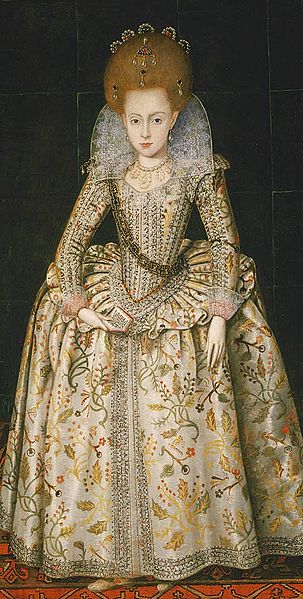
Nine seemed much older back then.
Catesby's goal was simple: Obliterate the Protestant English government and install a Catholic head of state. To achieve this goal, he and his co-conspirators planned to detonate a stockpile of gunpowder beneath the House of Lords during the State Opening of Parliament, November 5, 1605, when the king and the entire House of Lords would be assembled in one room. With the mass assassination accomplished, they planned to install James' daughter, nine-year-old Princess Elizabeth (Not to be confused with Elizabeth I, who was already deceased. Zombie monarchs rarely work out as well as you'd hope.) as a Catholic queen.


Throughout the spring and summer of 1605, the conspirators set the stage for their coup d'état. They leased an undercroft directly below the House of Lords and purchased the gunpowder required to demolish the building above. Catesby delegated responsibility for the explosives to a devout Catholic and military veteran, a gentleman by the name of Fawkes.

Guy Fawkes is the name most commonly associated with the Gunpowder Plot, because it was his arrest and subsequent torture and interrogation that led to the complete unraveling of the conspiracy. Things went bad when William, Baron Monteagle received an anonymous letter on October 26, 1605, warning him not to attend the State Opening of Parliament. An investigation commenced at once to discover the source of the threat. Just after midnight on November 5--only hours before the scheduled State Opening of Parliament--Guy Fawkes was discovered in the undercroft below the House of Lords, in the company of 36 barrels of gunpowder and a fuse.

In the days that followed, Fawkes and his co-conspirators were arrested, tried, and executed for treason. As I noted previously, Catholic emancipation did not take legal effect in England until 1829. Following the Plot, tighter laws were passed to curtail Catholic religious observance and legal rights. In January of 1606, Parliament passed the Observance of 5th November Act 1605. The Act declared November 5 an annual, public day of thanksgiving for the failure of the Gunpowder Plot. Initially observed with sermons and other boring services leading up to the iconic Bonfire Night festivities, it has since evolved into an excuse to set off fireworks, hang out around a big fire, and drink with friends.

The sinister smile of freedom.
I would be remiss if I did not point out that the Gunpowder Plot conspirators did not wish to create a religiously tolerant England. Rather, they hoped to revert England to a papist state--essentially turning the persecution tables on the Protestant population. Nevertheless, Bonfire Night was observed with decidedly anti-authoritarian tones in pre-Revolutionary Boston. The Guy Fawkes mask has been adopted as a symbol of anti-establishment sentiment thanks to the graphic novel V for Vendetta and its 2006 film adaptation. Most recently, both the hacking group Anonymous and Occupy protesters around the world have donned the mask as a sign of rebellion and group solidarity.

Like all political movements, the Gunpowder Plot of 1605 will continue to take on new meanings and interpretations as time passes. For some, the conspirators were regicidal traitors. For others, they were freedom fighters taking a stand against tyranny.

What would have happened if Guy Fawkes had not been arrested in the early morning hours of November fifth? Would the Plot have succeeded in killing James I and everyone inside the House of Lords? Oh, yes.

Tuesday, November 1, 2011

Alone

Saturday morning, I woke up bright and early, pressed the coffee, and turned on the computer, as is my custom. My intention had been to cancel an unwise Amazon order I'd placed the previous evening in a fit of nostalgia and Ambien. When I opened the browser and fired up my email program, I noticed things were running sluggishly.

And by sluggishly, I mean not at all. Page Cannot Load. Server Not Found. Flagrant System Error.  I turned to my husband still lying abed. "Hey, we don't have any internet," I informed him. He told me he'd go buy a carton of it later and rolled over.

A short time later, Mr. Boyce declared our household internet service dead in the water. This was bad news, as Chez Boyce is highly dependent on the internet. We use it for the computer, obviously, but also for our home phone and streaming entertainment to the television. Without the internet, we had been dropped into a virtual oubliette.

We had to wait until Monday for help, so we hunkered down for a weekend sans web. Saturday passed slowly. I kept thinking things like, Since I can't check Facebook, I'll just look up that recipe I've been meaning to try. Oh, wait. It's on the internet. Then I'd decide to call a friend, instead, but I couldn't do that, either, because we had no internet. I could still use my cell phone to text, thankfully, but bite-sized morsels of conversation aren't very satisfying.

Sunday wasn't any better. It's strange to realize how much you rely on something only when it's gone. I read and worked some puzzles and took a nap. Mr. Boyce kept wandering into the room where the modem lives to watch its lights flicker.

By Sunday night, despair had begun to sink in. We were alone. Stranded on a deserted island in the middle of suburbia. It felt as if we had always been isolated like this, and that we might never contact the outside world again.

After some hours, my tears ran dry.

On Monday, Mr. Boyce got word that help was on the way. Someone was coming in a life boat / cable company van. We arranged our afternoon to make sure one of us was here every moment to meet our rescuer.

The promised help never arrived.

Bitter and betrayed, we gathered the tatters of our dignity about ourselves. We didn't need the internet, anyway, I declared. We were fine without it. Just fine. I helped the Boycelings get ready for Trick-or-Treating. We had a fun evening walking the neighborhood, saying hello to neighbors, and congratulating children on clever costumes.

I realized we could still be connected without the internet--if on a much smaller scale. I arrived at a place of peace about our lack of internet. Of course, it was vexing to not be able to dial 911 in case of emergency, but we could always run to the neighbor's house if necessary. We have neighbors, a fact I sometimes forget as we isolate ourselves inside our house, connecting to everyone in the world except for the other humans in our physical proximity.

Today, obviously, the life boat arrived. I rolled out the red carpet as my hero replaced our terminally vegetative modem with a new, lively one. So here I am, reconnected. No longer alone. Alone as ever.

Thursday, October 27, 2011

Finding Your Voice

Authorial voice. What the heck is it, what's it good for, and how do you get your own?

For writers, voice is a word we see in critiques and in submission guidelines under What We're Looking For, along with great plots and relatable characters.

For readers, voice is something to discuss at book club. Ultimately, it's what draws you into a story and keeps you there.

A strong, clear authorial voice is an asset to both writers and readers.

What the heck is it?

In writing, voice is simply the way an author speaks on the page. It's the summation of word choice, syntax, rhythm, and so forth.

What's it good for?

An author's voice is unique to that individual. It's how we distinguish ourselves from other writers.

To illustrate, here are brief passages from two nineteenth century novels:

Example one: Summer passed away in these occupations, and my return to Geneva was fixed for the latter end of autumn; but being delayed by several accidents, winter and snow arrived, the roads were deemed impassable, and my journey was retarded until the ensuing spring. I felt this delay very bitterly, for I longed to see my native town and my beloved friends. (Frankenstein, by Mary Shelley, first published in 1816)

Example two: The first part of their journey was performed in too melancholy a disposition to be otherwise than tedious and unpleasant. But as they drew towards the end of it, their interest in the appearance of a country to which they were to inhabit overcame their dejection, and a view of Barton Valley as they entered it gave them cheerfulness. (Sense and Sensibility, by Jane Austen, first published in 1811)
This sweet face authored your earliest
nightmares.

These passages are similar in both topic and theme (travel, unhappiness), and were published only five years apart. Though there are just two sentences in each passage, Shelley's feels as if there are more, due to the rhythm she creates with punctuation. The first sentence has six phrases separated by commas or semicolon. By contrast, Austen's long sentence (the second one) has only three phrases separated by commas. Shelley's pacing invites the reader's eyes to linger, while Austen's sentences can leave the reader feeling like she needs to catch her breath when she finally reaches a period. Shelley's writing employs plainer words, while Austen tends to the florid.

Despite the similarities in these two brief passages, there are sufficient differences--thanks to each authorial voice--that the two would not be confused as coming from the same writer.

This ability to distinguish oneself from other authors through a strong voice is especially important in genre fiction, such as Romance or Mystery, in which many other writers are telling similar stories. Off the top of my head, I can tell you the stand-out characteristics of a handful of Romance authors--and all those traits relate to voice. Wittiness or concise writing or lyrical prose will appeal to different readers, and keep the ones who appreciate that voice coming back for more.

How to develop a voice of your own

Whether you write a blog, a novel, a poem, or indignant letters to the editor, finding and using your authorial voice is important. How do you do that?

The good news is that, to an extent, your voice comes naturally. You probably never put a lot of thought into your conversational speaking voice. The words you choose to use, whether you inject your speech with sarcasm or humor, these are things that come naturally to you. So, too, will your writing voice.

Try it with a little Ozzy this time.
Write in the way that feels most comfortable. Don't try to force yourself to be something you aren't. For instance, I adore good snark when I'm reading a piece, but that's just not how I write. I can inject some levity into my own work, but I will never be a humorist. Follow your natural inclinations where they lead.

If you just aren't sure what your voice is like, try out different styles of writing. Maybe your prose is witty like David Sedaris, or stark like Hemingway. Try on various styles and see what fits. Be aware that your authorial voice might be dissimilar from your speaking voice, or they might be nearly identical. The two are different animals, though, so don't try to force your writing voice to be the same as your speaking voice.

Finally, write, write, write. The more you write, the more comfortable you will become with your voice, and the clearer it will be. Just as a young singer may have a sweet singing voice, it takes effort and practice to hone that voice into a clean, unique instrument.

Sunday, October 23, 2011

Growing (Vocabulary) Pains

Watching children grow is bittersweet, as any parent will tell you. It's so exciting to watch those first steps, to see that first tooth, to run beside them on their first bike. Yet there's sadness, too, at leaving earlier stages behind. Those little infants I held in my arms and recited poetry to turned into toddlers who couldn't wait to run away from me at the park. The fact that they always come running back again doesn't quite soothe the hurt of the initial running away. I know that they'll never be mine quite as much as they were before. And so it goes, day after day and stage after stage. Growing and changing and moving farther away from me.

Soon enough, she'll inform you that
she never asked to be born.
The physical development of children is one thing, but it's their cognitive development that'll really break your heart. Since I'm blogging about it, of course I'm thinking about words. Their words. A child's words.

Children discover the power of words alongside learning to roll over or hold a spoon. They learn their name is a special word that refers only to themselves. They learn that calling to Mama by name will summon her as effectively as crying. Words empower children to describe the world around them and to express the world within them.

Inevitably, though, children will wield words as weapons. Their efforts at word hurling can be humorous in the beginning. It's hard to take a tiny tyrant seriously when she screams that you're a stinkyhead.

Giggle as we might, however, children deep down know that words can be just as painful as a physical blow. A child will report an incident of name calling as quickly as they tell on another child for slapping. Parents must teach children to speak kindly, just as we teach them not to hit.

 All the while a child is learning how to express himself in words, he is also learning to respond to the words of others. Hearing that he is loved, or clever, or has done something well gives a child joy. Children crave those words of encouragement and affection. Such verbal affirmations help children feel safe and secure.

A mother's pipe dream


On the other hand, sadly, children feel pain when hurtful words are thrown at them. Holding my son in my arms while he wept over the terrible things a friend said to him is one of the most trying things I've gone through as a parent. Cuts and scrapes can be washed and bandaged. Illness can be treated with medicine. But once someone hurts your child with words, there's no magic mommy kiss to make it better. All you can do is try to ameliorate the damage. Eventually, they move past it--a little tougher, a little wiser, a little less innocent.

Such incidents have happened, and will happen, again. And again. The words a child hears subtly change who they are and who they become. Even after a child develops the coordination to stop tripping over her own feet most of the time, she will still cause and receive hurt with words. Childhood tantrums become adolescent breakup speeches become adult sharing bad news. We carry the tantrums and breakup speeches and gossip and name calling with us, too, forever hurting one another. Words are the childhood trauma none of us escape.